
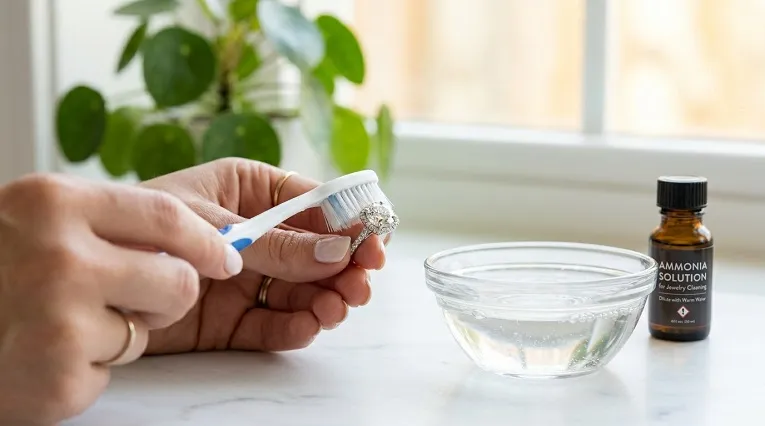
Quick answer: The safest way to clean a diamond ring at home is to soak it for twenty minutes in warm water mixed with a few drops of mild dish soap, then brush gently around the stone and setting with a soft toothbrush, rinse under warm running water and dry with a lint-free cloth. This method works on diamonds set in platinum, white gold, yellow gold and sterling silver. Avoid toothpaste, bleach and ultrasonic cleaners unless a jeweller has confirmed your setting can handle them.
A diamond ring collects everyday residue faster than most people expect. Hand cream, soap film, cooking oil and simple dust settle behind the stone and dull its sparkle within days of wearing it. None of this means the diamond is damaged. Diamonds are among the hardest natural materials on earth, rated 10 on the Mohs scale, so the stone itself is rarely at risk. The real skill in cleaning a diamond ring at home lies in protecting the metal band and the setting that holds the stone in place.
This guide covers the safest cleaning method step by step, how the approach changes depending on whether your ring is platinum, white gold, yellow gold or silver, which products to keep away from your ring entirely, and when it is worth taking the piece to a professional instead.
Why Diamond Rings Lose Their Sparkle
A diamond is graded on the four Cs: cut, colour, clarity and carat. Cut is what actually produces the sparkle you see, because it controls how light enters the stone and bounces back out. A layer of oil, soap residue or dust sitting on the surface interrupts that light path, which is why even a flawless, well cut diamond can look flat and lifeless when it needs cleaning.
The area directly underneath the stone, where the prongs or setting hold it in place, is usually where the most buildup collects. This is also the hardest area to see, which is why a ring can look clean on top while still appearing dull overall.
The Safe Method: Step by Step
- Fill a small bowl with warm water. Add two or three drops of a mild, unscented dish soap. Avoid anything labelled antibacterial or moisturising, since these often leave a film behind.
- Soak the ring for fifteen to twenty minutes. This loosens grease and residue so you are not scrubbing it off, which reduces the risk of scratching the setting.
- Brush gently with a soft toothbrush. Use a baby toothbrush or a dedicated jewellery brush with soft bristles. Focus on the underside of the stone and around the prongs, brushing away from the setting rather than across it.
- Rinse under warm running water. Plug the sink or use a strainer first, since a ring can easily slip down the drain.
- Dry immediately with a lint-free cloth. Leaving a ring to air dry can allow moisture to sit around the setting, which speeds up tarnish on silver and can dull rhodium plating on white gold.
Cleaning by Metal Type
The diamond itself can handle the soap and water method regardless of setting, but the band needs slightly different care depending on the metal.
| Metal | Safe for Soap and Water | Extra Care Needed |
|---|---|---|
| Platinum | Yes | Develops a natural patina over time, which many people prefer. A jeweller can re-polish it if you want the original shine back. |
| White gold | Yes | Usually rhodium plated. Avoid abrasive cloths, since they wear the plating down faster. Re-plating every one to two years keeps the bright white finish. |
| Yellow gold and rose gold | Yes | Softer than platinum, so avoid hard scrubbing that could create fine scratches over time. |
| Sterling silver | Yes | Prone to tarnish. A silver polishing cloth after drying keeps the band bright between full cleans. |
What to Avoid
Toothpaste. It is mildly abrasive, which is exactly why it works on teeth. That same abrasiveness can create tiny scratches on gold, platinum and silver bands over repeated use.
Bleach and chlorine. Both can pit and discolour gold alloys and are particularly damaging to platinum, causing a condition jewellers call fire scale.
Ultrasonic cleaners at home. These use vibration to loosen dirt, which is highly effective but can also loosen prongs on an older or well worn setting. If your ring has any loose stones or visible wear, skip this method and see a jeweller instead.
Alcohol based cleaners. These can strip the rhodium layer from white gold and dry out any organic materials nearby, such as pearls if your ring has accent stones.
How Often Should You Clean a Diamond Ring?
A light clean with a soft cloth once a week keeps everyday residue from building up. A full soap and water soak every two to four weeks is enough for most people, though this depends on how often the ring is worn and what activities it is exposed to. Rings worn daily during cooking, gardening or exercise tend to need cleaning more often than rings kept for special occasions.
Signs You Need a Professional Instead
Take your ring to a jeweller rather than cleaning it at home if you notice a loose stone, a bent or worn prong, a crack in the band, or tarnish and residue that does not lift after a full soak and brush. Many jewellers, including those based around Hatton Garden and other UK jewellery quarters, offer a free inspection and steam clean, which is worth taking advantage of once or twice a year even if you clean the ring yourself in between visits.
Frequently Asked Questions
Can I clean my diamond ring with washing up liquid?
Yes. A few drops of mild washing up liquid in warm water is one of the safest and most effective ways to clean a diamond ring at home, as long as you avoid antibacterial or moisturising formulas.
Is it safe to use an ultrasonic cleaner on a diamond ring?
It depends on the setting. Ultrasonic cleaners are safe for solid, well maintained settings but can loosen prongs on older or worn rings. If in doubt, ask a jeweller to check the setting first.
Why does my diamond ring look cloudy even after cleaning?
Cloudiness usually comes from a build up of soap residue, lotion or oil trapped behind the stone. Soaking longer and brushing more thoroughly underneath the setting, rather than just on top, usually resolves it.
Can I wear my diamond ring in the shower?
It is better to remove it first. Soap and shampoo residue builds up around the setting, and hard water can leave mineral deposits that dull the metal over time, particularly on sterling silver and white gold.
How do I know if my diamond ring needs professional cleaning?
If a thorough soak and brush at home no longer restores the sparkle, or if you notice any looseness in the setting, it is time to see a jeweller rather than continuing to clean it yourself.
Final Thoughts
Cleaning a diamond ring at home comes down to patience rather than strong chemicals. A warm soak, a soft brush and a thorough dry will keep most rings looking their best between professional visits. If you are still deciding on a ring or thinking about your next purchase, our guide on choosing the perfect diamond engagement ring covers the four Cs in detail, and our jewellery hallmarks guide explains how to check the metal purity stamped inside your band. If your ring is set in silver rather than gold or platinum, see our guide on what sterling silver actually is for more on how that metal ages and how to look after it long term.